
DOLLAR
The Gang of Three
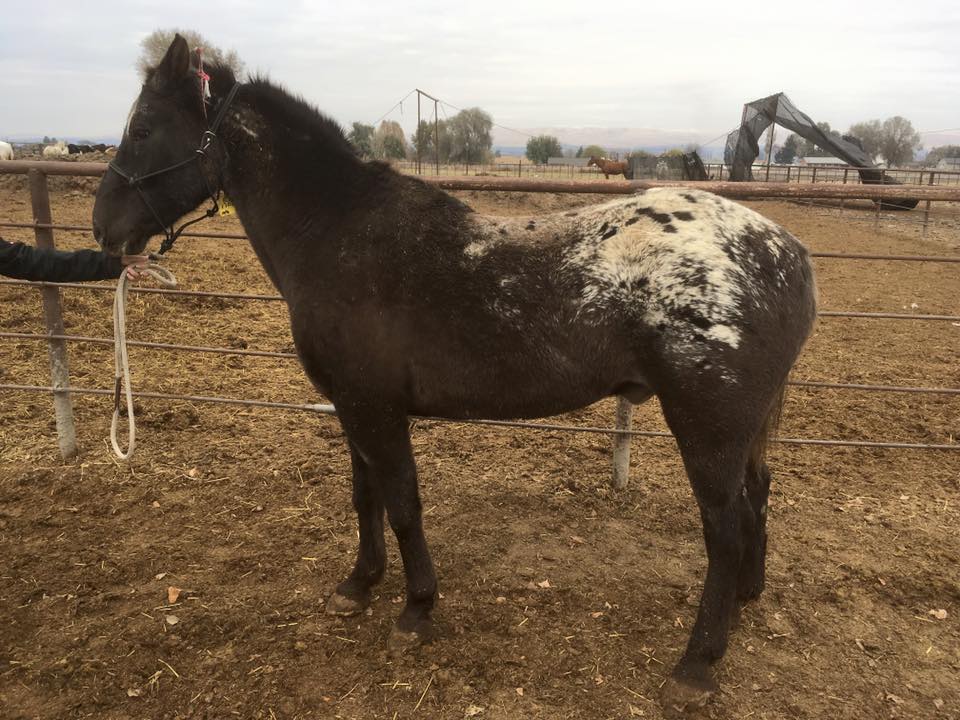
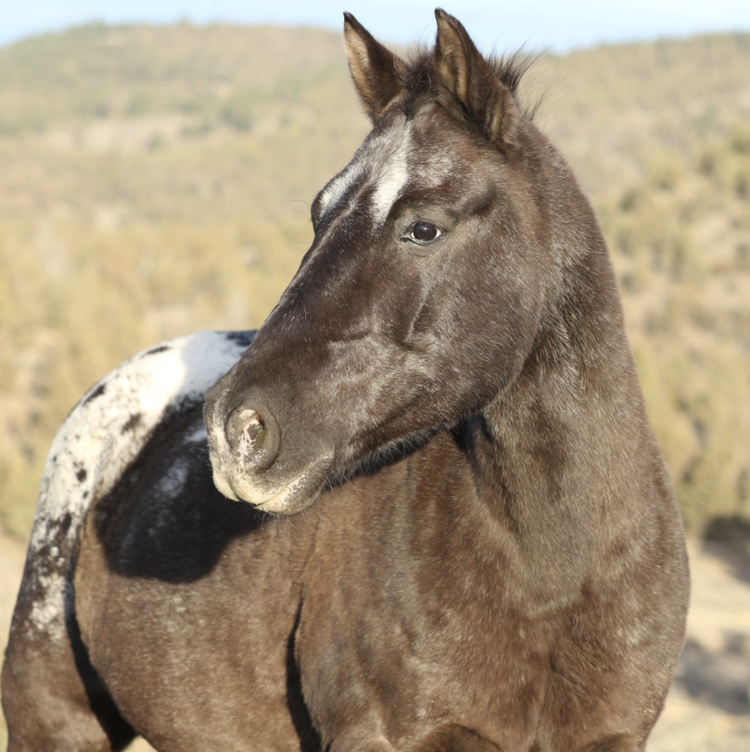
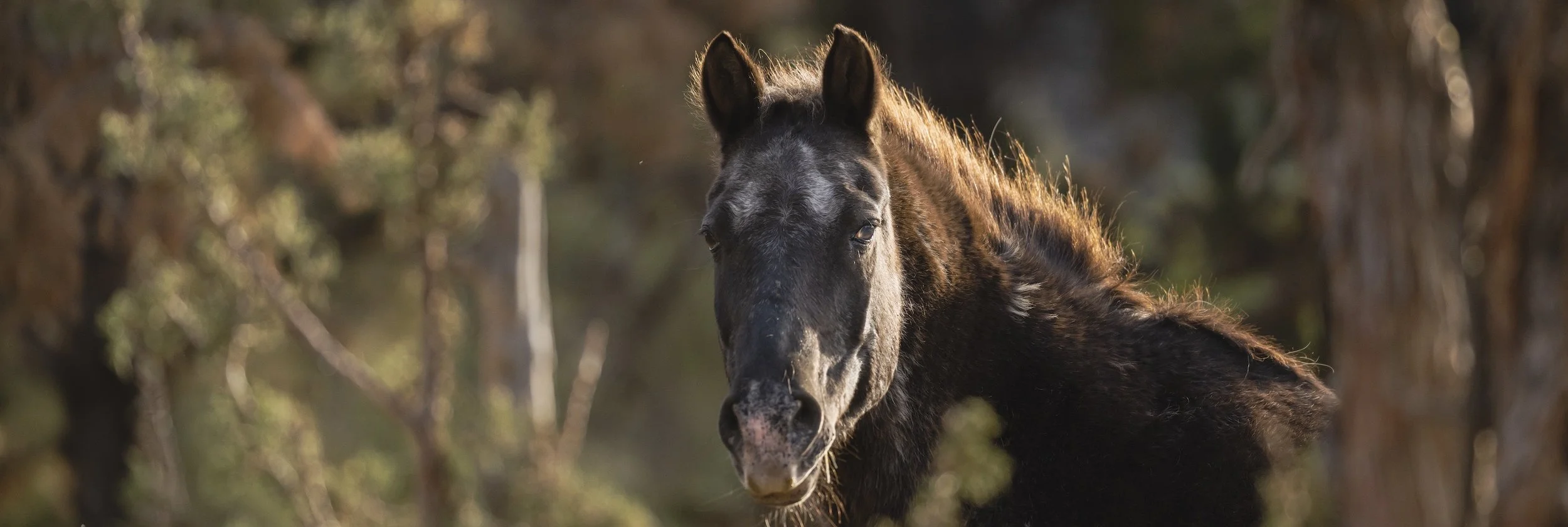
Dollar was our first save from Warm Springs, Oregon. This herd is famous for its appaloosas and mustangs of all colors and sizes. Dollar is an amazing blanketed Appaloosa, a chocolate- brown version of Phoenix, who comes from the same HMA - as do Blue Moon, Ghost, Two Spots, and Chief. A foundation stallion of this herd was also named Dollar. He was captured, but released to keep his genes out there and looked similar to our Dollar.
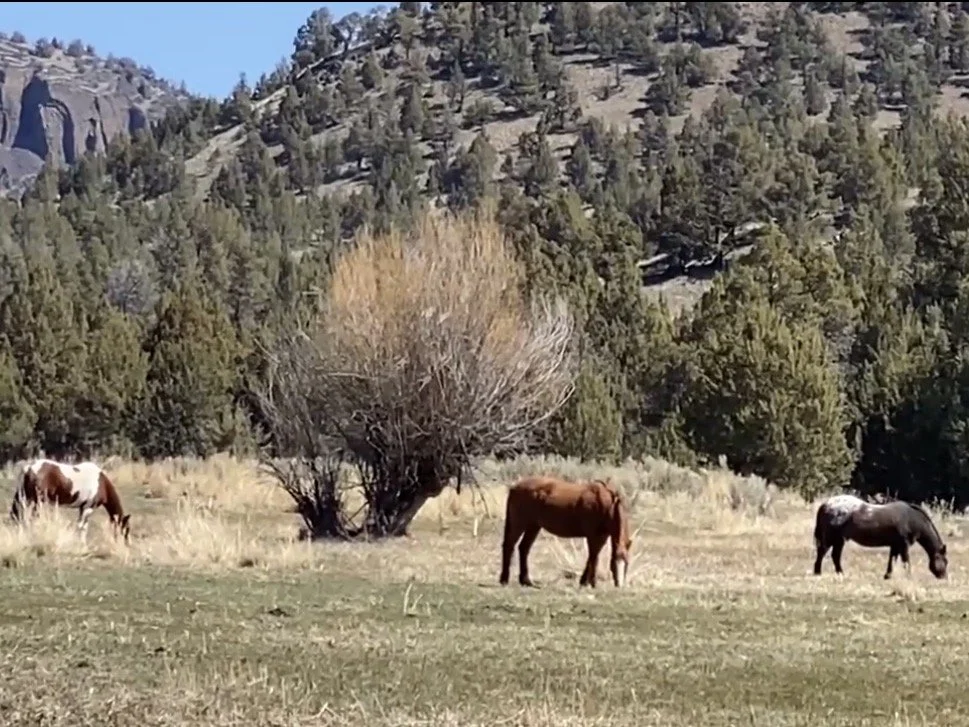
This herd is famous for its Appaloosas. Once upon a time, the BLM managed and maintained them for this genetic inheritance. Now they’re driving the population down to genetically unviable numbers. Multiple roundups left only 50 on the range as a foundation herd. They never released 100 captured stallions as they were supposed to according to the plan. They’re scheme to perform spaying experiments on the mares was, fortunately, shut down.
Dollar has the short tail - also known as a "rat tail" - that is characteristic of a true Appaloosa. History suggests that Indigenous Tribes may have bred them this way to make hunting easier. The shorter the tail, the less likely it was to get caught in bushes and shrubs.
Dollar ended up at a kill pen after going through a horrible livestock auction in Eugene, Oregon that sends a lot of horses to slaughter. We saw posts and photos of him standing for a month at Sunnyside in Washington State - a place that could not be more cynically named in view of what it really does. I was sure someone would take this handsome, healthy-looking boy, who apparently was broke to ride. When no one did, I rang the feedlot and was told he would ship that weekend for sure unless he was paid for and picked up. Jon set off to get him and bring him home.
Dollar was released into a herd of boys with all the joyful squealing and stomping of male introductions. He was so happy and grateful to be free. He and Otis - who also ended up at Sunnyside via Eugene - taught my first riding horse, Elvis - who is not a mustang - how to be wild. They were the Gang of Three for many years and made it their mission to strike out on their own to find the best grasses - their bellies told the story of success. Sometimes Janelle and I had to hike deep into dense brush above Spring Valley to find them out in the middle of nowhere. They seemed a little disappointed that we had discovered their bandit hideout, which was rich in bunch grasses that had not been grazed for years.
During a herd check in September 2024, we noticed Dollar was standing alone. When we threw him some hay, he didn’t see it. We immediately knew there was an issue with his eyes and saw cloudiness in one. Janelle came back with a truck and trailer, loaded him up, and took him straight to the vet. Dollar has glaucoma in the left eye caused from insidious uveitis. It's a type of uveitis that is very difficult to notice, so it's possible he'd had small flare ups before we caught it. The right eye has uveitis as well. Another aspect of Appaloosa genetics is blindness issues due to the sensitive pink skin around their eyes.
Dollar was twenty-five years old at this point. As much as possible, we let these horses stay out with the herd until we need to bring them in for ongoing medical treatment. Dollar had a fabulous run. While it was sad to separate him from Otis and Elvis, he receives care in a pen, where it is safe for him as his vision fades.
Introducing him to three sweet special needs mares was the most exciting thing that ever happened to Lily. She had never seen a boy up close before. Romance blossomed between Dollar and Blue Moon. She is blind, he is mostly blind, but rapidly losing his sight. Two Appaloosas in their twenties from Warm Springs, Oregon found each other late in life and share a gentle time and space together.
#skydogdollar #skydoggangofthree #skydogdollarmeetsmares #skydogdollarbluemoon
Dollar currently has a sponsor
By committing annually to a $100/month sponsorship of a mustang or burro, you help us enormously by supporting our existing rescues so we can continue saving more. To learn more about becoming a sponsor and see which animals need them:
American Mustangs and Burros Need Your Help
In addition to supporting our work by donating, becoming a patron on Patreon, or sponsoring a Skydog, there are several important pieces of legislation to protect American equines currently moving through Congress. It only takes a few minutes to contact your Rep and two Senators to urge them to support these bills. You can Contact Members of Congress by calling the Capitol Switchboard (202) 224-3121, submitting contact forms on their individual websites, or sending one email to all three simultaneously at www.democracy.io
Save America’s Forgotten Equines (SAFE) Act of 2025 (H.R.1661 in the House and S.775 in the Senate). This bill would amend the Agriculture Improvement Act of 2018, commonly known as the “Farm Bill”. There are several important provisions for animals in that omnibus federal law, including the Cat and Dog Meat Trade Prohibition Act. It is currently illegal to slaughter, transport, possess, purchase, sell, or donate dogs and cats, or their parts, for human consumption. The SAFE Act would extend the ban to equines and shut down the slaughter pipeline that sends some 20,000 American horses and donkeys to savagely monstrous deaths in foreign slaughterhouses every year.
The Wild Horse & Burro Protection Act of 2023 (H. R. 4356) The bill would eliminate the use of helicopters in rounding up wild horses and burros, and require a study into alternative methods for humanely gathering the animals.
Ejiao Act of 2025 (H.R. 5544). To ban the sale or transportation of ejiao, a gelatin made from boiling donkey skins, or products containing ejiao in interstate or foreign commerce, which brutally kills millions of donkeys primarily for beauty products and Chinese medicine.
See our How to Help menu for other actions to ban zebra hunting at canned hunt ranches in Texas & Oklahoma, bringing an end to the BLM using Sale Authority to funnel wild equines into the slaughter pipeline, and stopping production of Premarin & other drugs made from pregnant mare urine.